Membership

Meet TESOL Members

Hear From Members About Why They Love the TESOL Community

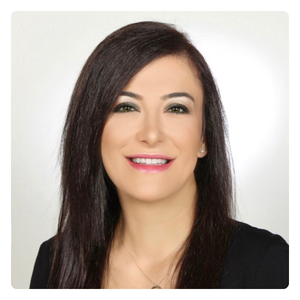
Meet Catherine Stepan

Catherine Stepan
United States

I grew up in Elmhurst, Queens, where the street was our playground and English came in many flavors. Inside our tight apartment, Czech filled the air through food, tradition and shouts about homework. Outside it was yous guys, lemme axe you, braided together with slang and the children of immigrants. We were fistfuls of seeds waiting to bloom in a melting pot called Queens.

My parents had arrived as refugees, escaping Communism with nothing but my sister, a suitcase, and their documents hidden in her diapers. Their backstory could be a top streaming drama. They did not know English, but knew dignity and hard work. They also reminded us that we belonged, and slowly they learned the words in English to define their own America. 


At school, I learned my R’s didn’t sound like everyone else’s. A speech teacher used words like railroad while my older siblings teased me into practice. I read aloud until wabbit became rabbit and, somewhere between the library and the ten-block walk home balancing books in my arms, I fell in love with the English language. Reading was where my Czech home voice and my street voice found a way to dream. 


I didn’t take a straight road into teaching. I wandered across states, oceans, and ideas of who I wanted to become. A community-college professor stated a simple truth - you can make a life out of the thing you love. While working, I went to college and earned my BA in English & Secondary Education, then continued my MA in English and certification in teaching ESL. Years later, pursuing PhD studies in my parents’ homeland, I read early Czech women’s voices that echoed the courage of my mother’s. Education, I learned, gives you the tools to blossom.


My first classrooms were in New York City, teaching English and creative writing to teens and adults. Everywhere I taught, the same truth reappeared. People come to language with hope and fear in equal measure. My job was to tilt the balance toward hope and with the same grit as my students, I still do.  


One day back in Queens, teaching budding teenagers, I wrote two words on the board: 

He cries.  “Miss, boring,” Halima said, shy but sure. 


Exactly. We talked about why it was boring and how sentences are bones that need muscle. On a green strip of paper I wrote, Cool words make cool sentences, and taped it, vertically, to the window. This began our grammar flower. A simple stem, eventual leaves for subject and predicate, and petals for each part of

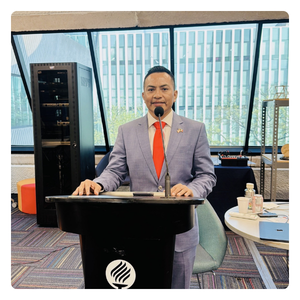
Meet Hilal Peker

Hilal Peker
United States

My journey in English language teaching began during my undergraduate studies, when I volunteered as an English teacher for the children of university staff. Many of these children faced financial barriers that prevented them from accessing private language instruction, so a group of us dedicated our weekends to supporting their learning. Witnessing their enthusiasm and growth in developing a new language was deeply rewarding and inspired me to pursue a master’s degree in English Language Teaching

During my graduate school years as a Fulbright scholar at the University of Texas at Austin, mentors such as Elaine Horwitz and Veronica Sardegna invited me to think bigger about identity, equity, and what it means to build classrooms where multilingual learners thrive. At my first TESOL International Convention in Dallas, I felt an immediate sense of home. I met colleagues who believed, as I did, that scholarship should open doors for learners on the margins. That conference marked the beginning of my professional service journey. I started volunteering, first, with the Publishing Professional Council, then the Awards Professional Council, because I wanted to stay close to the community that was shaping me.

Over time, TESOL became the place where my professional growth and my core values met. As Assistant Strand Coordinator and later Strand Coordinator for Advocacy, Social Justice, and Community Building, I learned how to translate ideals into practice: crafting fair review processes, broadening outreach, and making space for different voices. Each role stretched my leadership in new ways, and with every step I understood the field and myself more clearly.

A milestone I cherish is chairing the Conferences Professional Council in 2024. We aligned the program with TESOL’s strategic direction during a complex year, foregrounding DEIA and establishing guidance for responsible use of AI in proposal writing and review. In a period when public debates in my home state affected ESL educators, students, and families, our team worked to ensure the convention remained both rigorous and welcoming. That experience crystallized my belief that governance, when done well, is pedagogy at scale: it teaches a community what it values.

Most recently, serving on and then leading TESOL’s Nominating Committee deepened my respect for the architecture of trust that reinforces professional associations. Ethical outreach, transparent criteria, and conflict-of-interest safeguards are not just procedures; they are promises to our members. Encouraging outstanding colleagues to step forward, especially those from underrepresented contexts, has been one of the most meaningful parts of my TESOL life.

I came to TESOL as a first-generation college graduate from a village without a school; I stayed because TESOL keeps widening the circle. It gave me mentors, collaborators, and lifelong friends; it gave my students and the communities we serve stronger advocates. My hope for the next decade is simple: that we continue to make leadership more inclusive, scholarship more connected to practice, and our classrooms more just. That is the story I’m grateful to be part of and the work I’m eager to keep doing.

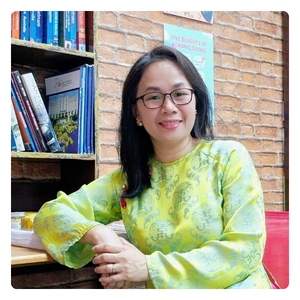
Meet Pablo Maldonado Pérez

Pablo Maldonado Pérez
Mexico

My journey as an English language educator began nine years ago at CBTis 178 in Tlapa de Comonfort, Guerrero, a mountainous region of Mexico where the Náhuatl, Me’Pha (Tlapaneco), and Mixtec languages coexist with pride. In this multicultural context, teaching English is not simply about grammar or vocabulary — it is about building bridges among languages, cultures, and dreams.

From my very first classes, I realized that English could become a language of dignity, inclusion, and opportunity. Many of my students are Náhuatl, Me’Pha, or Mixtec youth who learn English as their third language, after their Indigenous language and Spanish. Their effort and resilience inspired me to create lessons that connect language with culture, emotion, and technology. For them, learning English is not about losing their roots, but about extending them toward the world.

Over time, my vocation expanded beyond the classroom. Today, I serve as Coordinator of RELO–DGETI Projects (Regional English Language Office, U.S. Embassy in Mexico, and the Dirección General de Educación Tecnológica Industrial y de Servicios), leading national collaborations between American specialists and Mexican teachers in areas such as Technical English for Artificial Intelligence, Robotics, Tourism, and Entrepreneurship. These programs reflect my belief that English can also be a tool for scientific, technological, and social development.

TESOL International Association has been a constant source of guidance and inspiration throughout my career. Through its global community, publications, and conventions, I have learned that teaching English is not only about language — it is about forming empathetic, creative, and globally minded citizens.

From the mountains of Guerrero, where voices in Náhuatl, Me’Pha, Mixtec, Spanish, and English come together, I continue to believe that languages do not divide us — they multiply us. Teaching English here means planting seeds of hope, identity, and transformation.

Because every word my students learn in English carries the echo of their roots.

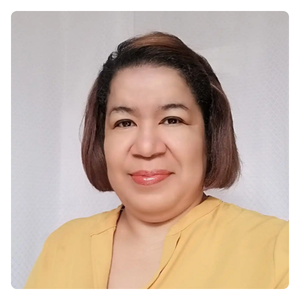
Meet Nguyen Le Quynh Tram

Nguyen Le Quynh Tram
Vietnam

My TESOL journey—where should I start? Perhaps it was more than forty years ago.

My earliest memories of English take me back to Grade 1, to a half-boarding convent school in Ho Chi Minh City, Vietnam. It was there that a nun first opened the door to another language for me, guiding me through the soft music of unfamiliar sounds: “A is for apple, B is for banana… This is a chair… Those are books.”

I was completely fascinated by the sounds of this new language, so different from my mother tongue, Vietnamese. When I returned home each day, I would play “teacher.” I imagined myself standing in front of a classroom like my nun teacher, arranging my mother and several books as my “students.” I carefully placed the books on the floor, recreating the exact layout of the classroom by the stairs in that beautiful convent where my English journey began. Those evenings—teaching English in my imaginary classroom—quietly shaped the beginning of my path as an English teacher.

That childhood love and dream lingered within me—sometimes faint, sometimes vivid. Deep down, I always knew what truly made me happy: books, and the joy of connecting with others through a different language. This feeling carried me through to the age of eighteen, when I had to decide on my career path. I hesitated, but my mother encouraged me to accept an offer from the University of Pedagogy in Ho Chi Minh City, Department of TEFL. There, I was fortunate to learn from dedicated teachers who reignited and strengthened my love for teaching English.

After graduation, teaching English to speakers of other languages took me far and wide—from formal classroom settings in Vietnam with Vietnamese, Chinese, and Korean learners, to exam preparation for Vietnamese and Japanese students, and mentoring Chinese students in Australia. Wherever I have been, English teaching has shaped who I am, not only as a professional, but also as a person.

As I write this, it is Tết—the Vietnamese Lunar New Year—and this feels like the perfect moment to reflect on how English allows us to share our culture with friends around the globe. English has given my students confidence to engage with the world, while still keeping their roots firmly grounded in their own cultural identity. I often tell my learners that in this globalized era, English is not about replacing who you are—it is about giving you a voice to share who you are with the world.

And I believe these are the enduring values that TESOL has brought, and continues to bring, to educators and learners alike. That is why, after nearly three decades in this field, my heart remains full of love for teaching and for witnessing transformation in my students’ lives: from shy teenagers who could only smile and say “hello” during their first placement test to becoming confident adolescents receiving their target IELTS scores and stepping into universities in the United States, Canada, and other English-speaking countries; from a determined nurse with big dreams but limited confidence in her English, to becoming a registered nurse who completed a prestigious scholarship program in the US and now uses English to teach her profession to others in Vietnam.

For me, TESOL represents a circle of connections—spreading transformation through the power of language. On a personal level, my TESOL journey reflects this transformation, from

a childhood make-believe classroom to the leadership of a trusted English language school in Ho Chi Minh City, Vietnam that I have co-founded with care and commitment.

Thank you, TESOL, for sixty years of building bridges between people, cultures, and dreams. May we all continue to treasure the flame for teaching English within us, because at the heart of our work is something far greater than language itself: the transformation of human lives.

Meet Zuleika Zapateiro

Zuleika Zapateiro
Panamá

I am Zuleika Zapateiro from Panama City, Panama. My journey in English language teaching began in 1995 at a private primary school. Those early years taught me the joy—and responsibility—of shaping young learners’ language skills. Teaching English quickly became more than a job; it became my passion and purpose.

As I grew in the profession, I discovered Panama TESOL, a national association of English language teachers.

In 2011, I attended its annual convention and joined as a volunteer, eager to connect with others who shared my enthusiasm. Through Panama TESOL activities, I met inspiring colleagues who spoke about the TESOL International Convention—a global event that united educators from around the world. The idea fascinated me, but at the time, it felt like a distant dream—geographically and financially out of reach.

Everything changed when I began working at the Center for English Language Immersion (CELI), a program supported by the U.S. Embassy in Panama. In September 2011, CELI announced it would sponsor two teachers to attend the TESOL International Convention 2012 in Philadelphia. When I heard about the opportunity, I thought, Why not try? I applied—not with high expectations, but with hope. To my surprise and delight, I was awarded one of the grants.

That moment marked the true beginning of my TESOL journey. The year 2012 became a milestone—the year I attended my first TESOL International Convention and visited the United States for the first time. It was a life-changing experience that opened a new world of professional growth and inspiration. I was amazed by the energy, innovation, and diversity of educators from every continent—each passionate about empowering learners through English. The workshops, presentations, and conversations were filled with creativity and purpose. For the first time, I felt part of a global community united by one mission: to make a difference through language education.

Since that unforgettable experience, I have never missed a TESOL International Convention—whether in person or virtually. Each year brings new opportunities: a different city to explore, new colleagues to meet, and fresh ideas to carry home. Through TESOL, I have built friendships that transcend borders and joined a network of professionals who continuously motivate me to learn, share, and lead.

Over the years, TESOL has been a bridge to countless opportunities and has shaped both my teaching and my confidence as an educator. It has connected me with mentors, leaders, and friends who encouraged me to take on new challenges. I have learned new ways to make learning inclusive, dynamic, and student-centered. Through TESOL, I have gained not only knowledge but also confidence, vision, and a sense of belonging to something bigger than myself.

TESOL exposed me to best practices and cutting-edge ideas that I adapted for my students in Panama, helping them become more engaged, curious, and confident language users. Every year, I return home with renewed enthusiasm, eager to apply what I have learned and share it with colleagues and students.

As I continued attending TESOL events—in countries such as Argentina, France, Colombia, Bolivia, and England—I realized I no longer wanted to only listen; I wanted to share. In 2023, I took a new step and became a presenter at the TESOL International Convention in Portland, Oregon. That moment was both exciting and humbling. Standing before an international audience, sharing my classroom experiences and innovative practices, I felt the same energy that had inspired me back in Philadelphia in 2012. But this time, I was part of the movement that inspires others.

TESOL has also helped me extend my impact beyond the classroom. Through Panama TESOL, I have contributed to organizing local workshops, supporting professional development initiatives, and encouraging other teachers to pursue similar opportunities. I believe that when teachers grow, their students and communities grow with them.

Through TESOL, I have learned that leadership is not about titles—it is about service, collaboration, and vision. Being part of this global organization has taught me to value diversity, listen with empathy, and lead with purpose. I have witnessed how educators from different cultures and backgrounds come together to create meaningful change in classrooms and communities. TESOL has shown me that we are stronger when we share, support, and learn from one another.

Looking back, I can clearly see how one decision—to apply for that CELI grant—changed the course of my life. What began as a single opportunity has grown into a lifelong journey of learning, service, and community. TESOL has empowered me to keep dreaming, keep learning, and keep connecting with others who believe in the transformative power of education.

Today, I am proud to say that TESOL is not just an organization I belong to—it is part of who I am as a teacher and as a global educator. Through TESOL, I have learned that English teaching goes beyond grammar and vocabulary; it is about building bridges, opening doors, and creating opportunities for others.

From Panama to the world, TESOL has been my compass—guiding me toward growth, collaboration, and purpose. It has given me the confidence to lead, the courage to innovate, and the humility to continue learning. And the journey continues, because every convention, every colleague, and every learner reminds me why I started this path in the first place: to make a difference, one lesson at a time.

Fourteen years have passed, and I feel deeply proud to call myself a TESOLer. TESOL has shaped my identity, broadened my horizons, and strengthened my belief that education is the key to transforming lives. From that first step in Philadelphia to every new step I take today, I carry with me the same sense of wonder, gratitude, and purpose. My TESOL story is still being written—one connection, one classroom, and one learner at a time.


Meet Zarish Khan

Zarish Khan
Pakistan

At 18, I walked into my first classroom with nothing but passion and a purpose: to help others find their voice in English. I had no formal title, no global recognition—only a belief that language could transform lives. What began as a personal mission soon became my lifelong commitment: to make education accessible, meaningful, and empowering for learners everywhere.

My dedication guided my professional journey. I became the youngest ESL instructor at PACC .I contributed to Teacher Training projects and Q Skills for Success resources, centering every lesson on empathy, inclusivity, and learner engagement.


Over the years, I earned four prestigious U.S. Embassy scholarships through the RELO program—including Transitioning to Teaching Languages Online (University of Minnesota), TESOL Elevate, Virtual TESOL Convention, and the OPEN Cubed Program by the US Embassy.


Each experience deepened my expertise in global pedagogy, instructional design, and online facilitation.


As part of the OPEN Cubed journey, I had 35 scholarships and over 600 applications. I could have given them all to one city, the easy and safe choice—but I couldn’t. I read every single application, felt the hopes, dreams, and struggles behind each story. I chose 35 educators from 35 regions, all from underserved and marginalized communities, because I wanted to bring opportunity to those who had never seen it, and give voices to those who had never been heard.


Today, those 35 scholars are not just teaching—they are changing lives, inspiring communities, and creating futures that were once unimaginable. From one decision, 35 sparks of hope have ignited a wave of transformation across Pakistan. I am deeply grateful to the U.S. Embassy for trusting me with this responsibility and giving me the chance to make this impact. Their support has shown that when opportunity meets heart, lives can be transformed.


For these efforts, I received the Dedicated Champion Award from the U.S. Embassy Islamabad, recognizing my leadership, innovation, and service to the teaching community.


Alongside this, I continued as an IELTS Trainer and Communication Specialist at Dow University, training healthcare, IT, and HR professionals in workplace communication. I authored a Workplace Communication Book and integrated AI tools for modern, effective learning. With the British Council, I championed Computer-Delivered IELTS, earning the Highest Registration Award three consecutive years and contributing research published in the Teacher Trainer Journal (UK).


Globally, I got selected by  the University of Oregon on intercultural communicative competence, helping educators implement culturally sustaining teaching strategies. I also served as an Ambassador for the American English Live Series in Brazil, hosting interactive webinars for over 120 educators worldwide. In 2023, I delivered a keynote at Michigan State University’s Virtual Teacher Education Summit, addressing STEAM education and 21st-century skills for educators across multiple countries.


In 2024, I was nominated to attend TESOL International Convention 2025 as a presenter. Due to a last-minute policy change, our trip was cancelled, but my co-partner presented my presentation in the United States ensuring my work was shared internationally. This year, in 2026, my presentation has been officially accepted, allowing me to contribute once again to a global audience. This journey of Resilience reminded of how far the 18-year-old volunteer has come—from teaching a handful of learners in Karachi to inspiring hundreds of educators globally.


Today, as a TESOL Course Facilitator, Instructional Designer, and RELO Alumna, I continue to mentor educators and design learning experiences that reflect empathy, equity, and innovation. Every scholarship, every classroom, and every collaboration has deepened my belief that teaching is not confined to walls—it is a force that connects people, cultures, and ideas.


That 18-year-old volunteer is still with me, reminding me that one spark of passion can grow into a fire of change. Teaching is not just shaping minds—it’s building bridges, lifting voices, and inspiring the world.


From one small classroom to a global stage, I’ve learned this: teaching is not just a profession—it’s a bridge that carries hope, empowers voices, and transforms the world.


Meet Mary Chang

Mary Chang
Japan

I am a child of immigrants from Southern China to the U.S.A. I know some Cantonese, mostly domestic words that I like to call “Kitchen Cantonese” from what my parents taught me. This means my Cantonese is limited to things found in the home and not related to politics, economics, or government actions.

One day, my father asked me what was being announced on the news. The story was about major layoffs from some companies. My Cantonese does not stretch to the words related to “layoffs,” so I had to think of a relatable example that my parents could understand and therefore get the gist of the news story. I mentioned an incident that happened to a relative who was laid off a few years earlier and my parents could get it.


In my case, my first students were my parents. They were clever and smart individuals, but being fluent in English was not something they could achieve. My challenge was to make a situation relatable so the language is not a barrier to understanding. As immigrants, my parents lived the daily struggle to communicate to those outside of their home, and sometimes to their children inside their home. They tried to express their ideas to those who may not share their language, their culture, or their life experiences. 


Thinking of the communication struggles of my parents is the foundation of my teaching style: Learn by doing; learn in phrases; learn well the expressions you need to use everyday; and explain with examples that make sense to the others in the conversation. 


Another teaching influence I had was through my third Japanese language teacher at university. I was fortunate to be offered an English language teaching position through the Japanese Ministry of Education once I completed my Bachelor’s Degrees. Although it was not necessary to have any Japanese language knowledge for this job, I wanted to have some language ability to make living in Japan not so difficult. 


My third Japanese language teacher was from Kobe, Japan but studied in Hawaii for high school and university. So, she had a deep understanding of what challenges learners have with Japanese. She was of the philosophy of actually using language in real time to communicate one’s intentions. For example, the class had to use the word “to wear” as a request (-te kudasai) like the activity “Simon Says”. Japanese has at least five different verbs for “to wear” depending on the article being worn ("haku" pants, "kiru" a shirt, "kaburu" a hat, "kakeru" glasses, "tsukeru" a watch, etc.). She had a male student come up to the front of the room and several articles of women’s clothing and accessories. The class had to politely request that this student “wear” a particular item. If the verb or the request form was not correct, the student could ignore the request. However, if it was correct, he would don on that particular item. At the end of the activity, the student did a fashion show walk of all of the items (e.g.: a skirt, a floppy hat, a beaded necklace) we correctly told him to wear.


Experiencing this style of learning (Task-Based Learning/ Project-Based Learning) truly had an impact on my style of teaching. While at graduate school, I learned about the different approaches and methodologies involved with language teaching. This time was also when I had my first experience with the TESOL International organization. My first graduate research project was the basis for my TESOL International co-presentation about team-teaching. The following year, I was chosen to represent my graduate school at their TESOL Conference booth, and I interacted with several individuals who were interested in continuing education and certification. The next year, I was given the TESOL Leadership-Mentoring Program Award and had the honor of being on the Minutes Approval Committee at the TESOL Business Meeting.


Since completing my MATESOL and Language Program Administration Certificate, I have continued to present at TESOL International and with other international teaching organizations. To maintain my professional development in this field, I have contributed a chapter to TESOL’s "New Ways in Teaching with Games", penned an arholarship to pursue my Master of Arts in TESOL at Payap University in Thailand. This was a transformative experience for me. Surrounded by educators from around the world, I gained new teaching strategies, deepened my understanding of language acquisition, and learned to approach English teaching from a global perspective. Due to the COVID-19 pandemic, I completed my degree in 2021, adapting to online learning and overcoming challenges I had never faced before.

After completing my master’s, I returned to Zangthi Primary School and taught there for another year. This period allowed me to apply the knowledge and skills I had gained abroad to my classroom, improving student engaticle about Résumé Writing in the "TESOL Connections Online Newsletter", and completed the TESOL Certificate - Developing an Online Teaching Program just before many language programs went digital due to the COVID pandemic lockdowns.


One of the wonderful things about being a language teacher is that we are people who share knowledge – to students and to fellow educators. As it has been said, “Once a teacher, forever a student.” May your teaching path always be full of learning moments.


Meet Quanisha Charles

Quanisha Charles
United States

My journey into TESOL was never just about teaching English but about understanding how language shapes lives, identities, and access to opportunity. As an English language specialist, my work has always been grounded in the belief that language education must be inclusive, critically reflective, and socially responsive. TESOL, for me, has been both a professional home and a platform for advocacy, scholarship, and transformation.

TESOL became a pathway to global and local engagement. I first became involved in TESOL through my early teaching experiences with multilingual learners, both in the U.S. and abroad. These formative years revealed the profound impact that English language instruction can have, not only on academic success but on self-perception, cultural navigation, and community belonging. Teaching in diverse contexts, I witnessed how English could be a bridge or a barrier, depending on how it was taught and who was doing the teaching. This realization led me to pursue advanced studies in English composition and TESOL, where I began to interrogate the racialized and colonial underpinnings of English language teaching. I became particularly interested in how race constructs teaching identity and pedagogy, especially for Black educators in global contexts. My scholarship began to center the narratives of Black native English-speaking teachers—voices often marginalized in mainstream TESOL discourse.

       TESOL has meant many things to me over the years, but above all, it has been a space for advocacy, critical inquiry, and community building.

  • Advocacy: I’ve used TESOL as a platform to challenge native speakerism, linguistic imperialism, and the erasure of Black and Brown educators in global English teaching. Through my writing, speaking engagements, and collaborations, I’ve worked to amplify the lived experiences of teachers whose identities complicate dominant narratives of who “belongs” in TESOL.
  • Critical Inquiry: My research has explored how race, language, and power intersect in the classroom. I’ve contributed to conversations around decolonizing English curricula, reimagining teacher training, and integrating culturally sustaining pedagogies into TESOL practice. These inquiries have informed my work with Critical Language Awareness, where we center community-engaged learning and racial justice in language education.
  • Community Building: TESOL has connected me with educators, scholars, and activists around the world. Whether through conference presentations, collaborative writing projects, or mentoring graduate students, I’ve found deep joy in building networks of care and resistance within the profession.

        There is much to celebrate in TESOL, especially as the field continues to evolve and respond to global challenges. I celebrate:

  • Multilingual Learners: Their resilience, creativity, and linguistic dexterity inspire me daily. I celebrate their stories, their struggles, and their triumphs.
  • Educators Who Teach for Justice: I honor those who center equity, care, and critical consciousness in their classrooms. These educators are reshaping TESOL from the inside out.
  • Decolonial and Anti-Racist Movements: I celebrate the scholars and practitioners who are pushing TESOL to confront its colonial legacies and embrace more inclusive futures.
  • Collaborative Spaces like Interest Sections: These spaces remind us that language education is not just about grammar and vocabulary—it’s about relationships, power, and transformation.
  • The Possibilities of Ethical AI: I celebrate the potential of AI to support language learning when used thoughtfully and ethically. I advocate for tools that empower rather than surveil, that support rather than standardize.

        As I continue my work in TESOL, I remain committed to centering marginalized voices, challenging oppressive structures, and building communities of care. I believe that TESOL must be a discourse that not only teaches language but also listens deeply, acts boldly, and imagines radically. I look forward to continuing this journey with colleagues, students, and communities who share a vision of language education rooted in justice, joy, and transformation. 

Meet Oscar Navas

Oscar Navas
Canada

Hi, my name is Oscar Navas, and I’m an English language instructor based in Toronto, Canada. I’d love to share a little bit about my journey—how I got started in teaching, and why it continues to be such a meaningful part of my life.

My teaching story began back in 1990, in El Salvador. At the time, I had just returned from a scholarship program in the United States and was pursuing a degree in computer science.

Teaching English wasn’t something I had planned—but U.S. college graduates were in demand for EFL roles, and I saw an opportunity to support my education. So, I trained for a teacher course, stepped into my first classroom, and started teaching students of all ages.


What began as a way to pay for school quickly turned into something much deeper. I found myself falling in love with teaching—the connection with students, the joy of helping someone find their voice in a new language, and the sense of purpose that came with it. I taught full-time for five years while completing my studies. Eventually, I had to step away when IBM hired me and I began building a career in IT. 

But the truth is, I never really left the classroom. Teaching stayed with me, resurfacing again and again throughout my life.


In the early 2000s, my family and I made the life-changing decision to move to Canada. My home country was going through difficult times, and the future for my children felt uncertain. We came looking for stability, opportunity, and a better life—and Canada became our new home. That experience deepened my appreciation for language as a bridge between worlds, and reinforced my belief in education as a tool for resilience and renewal.


As a native Spanish speaker, I’ve personally experienced the challenges of adapting to a new language and culture. I’ve often been told my accent is barely noticeable, and while that’s flattering, I believe what truly matters is clarity, connection, and competence. My background allows me to teach with empathy and authenticity—because I know what it feels like to learn English not just as a subject, but as a lifeline. That perspective continues to shape how I support my students, especially those navigating similar transitions.

Over the years, I built a successful career in IT, eventually serving as a Senior Manager at one of Canada's largest banks for over 15 years. I led teams, drove operations, and thrived in a fast-paced corporate environment. But teaching remained a constant thread—something I always returned to, whether in-person or online, with renewed energy and purpose.


More recently, after an organizational restructuring led to my role being eliminated, I found myself at a professional crossroads. And instead of seeing it as an end, I chose to view it as a turning point. I decided to give greater momentum to my teaching career—something that had always been close to my heart. I pursued new certifications, including CELPIP Instructor Training, with the goal of helping newcomers to Canada navigate language barriers and adapt more confidently to their new environment. As someone who once stood in their shoes, I understand the challenges—and I’m committed to being part of the solution.


My teaching journey has taken me across continents and formats. I’ve prepared students for IELTS, PTE, and CELPIP exams; taught business English to professionals; and worked with young learners on subjects like science and history. Whether students are in Toronto, Beijing, Mexico, or El Salvador, I’ve seen how language can transform lives. It builds confidence, opens doors, and connects people across cultures.


My connection to the TESOL International Association is relatively new, but already meaningful. Back in the early ’90s, professional networks looked very different—there was no internet as we know it today, and access to global teaching communities was limited. Most of my early development came through local institutions and hands-on experience.

Now, decades later, I’m proud to be part of a professional association that brings educators together from around the world. Joining TESOL has opened new doors for growth and collaboration. The TESOL/TEFL certification I earned in 2017 was a turning point—it gave me a stronger foundation and renewed confidence. Since then, I’ve continued to grow, recently advancing toward Level 2 CELPIP Instructor Trainer certification and completing specialized training with the British Council.


Now in my early 50s, I’m not winding down—I’m diving deeper. After a career pivot and a period of transition, I’ve recommitted to teaching full-time. This isn’t a late chapter—it’s a new one. I’m not here to fill time; I’m here to make a difference. I bring decades of experience, cultural sensitivity, and a deep understanding of how language intersects with real-world needs. I know what it means to lead, to teach, and to adapt—and I’m ready to use that knowledge to empower others.


TESOL’s 60th anniversary is a celebration of stories like mine—stories of educators who’ve evolved, persevered, and stayed passionate about helping others grow. I’m proud to be part of this community, and I look forward to contributing to its future with the same curiosity and commitment that sparked my journey more than three decades ago.

Meet Yiviri Rasifatu Tombir

Yiviri Rasifatu Tombir
Cameroon

I grew up in Mbiame, a small village in Cameroon, where English was a luxury, a key to a world we could hear but not easily enter. In school, it was the sole medium of instruction, and using our local language was punishable. Yet, outside the classroom, English vanished, replaced by the familiar sounds of home. Learning it felt like trying to catch smoke; it was everywhere and nowhere at once.

This early struggle with a language that was both a gatekeeper and a prize planted the first seed of my calling. I didn’t know it then, but my most embarrassing moments as a student were laying the foundation for my life’s work.

The frustration peaked when I moved to a city for school. My classmates, who came from homes where English was spoken, conversed with an ease I couldn’t muster. I felt isolated, my limited English a wall between me and friendship. The pressure was so immense that I eventually ran away, finding refuge in a school where my level of English was common. This was my first painful lesson in how language can exclude.

Later, at university, the struggle took a new, more personal form. I belong to a tribe stereotyped for our distinct pronunciation in English. In class, any mispronunciation, whether from me or others, was met with jeers, and the name of my tribe, Nso, would come up as everyone would shout: “Bansu tung, Bansu tung”, words that were used to mock our accent. English, the subject I loved, became a source of ridicule. It was then that my frustration crystallized into purpose: I would become an English teacher to dismantle these very barriers. I would teach English not as a tool for exclusion, but as a bridge. This resolve led me to a teacher training college, where I began to formalize my mission.

For over 10 years, my greatest pride has been witnessing the transformative power of English in the lives of my learners. I see my own past struggles reflected in their eyes; the frustration, the self-doubt—and it is an immense privilege to be the one who helps them dismantle those barriers. When a student finds their voice, gains the confidence to seize an international opportunity, or simply no longer feels ashamed of their accent, I see a life changed. Knowing that I can give them the key that was once so difficult for me to obtain, and in doing so, help them unlock a world of greater dignity, connection, and possibility, is the most humbling and fulfilling accomplishment I could ever imagine.

My career in English language teaching has since connected me to the world in ways my younger self could never have imagined. I am no longer just a Cameroonian; I am a global citizen. As a Fulbright scholar, I learned alongside educators from 60 countries. Through the Africa English Language Teachers’ Association (Africa ELTA), I have built a pan-African network of colleagues and friends. Conferences from TESOL in the U.S. to IATEFL in the UK, and ELT Malta are becoming my regular meeting grounds, and my time as a Hornby scholar at the University of Exeter deepened my practice. On social media, the global ELT community feels like the largest, most supportive family one could find. The language that once isolated me now ensures I have a friend in every corner of the globe.

Central to this transformation has been my membership with TESOL. It has been an influential force in my professional growth, network, and teaching approach. The free webinars have been a constant source of innovation, particularly those from the Bilingual-Multilingual Education Interest Section, which ignited my research passion for multilingualism. The tech-focused sessions have directly shaped my classroom practice, integrating tools that make learning more accessible.

But TESOL gave me more than knowledge; it gave me confidence. The opportunity to serve as a conference proposal reviewer was a milestone. Being trusted to help shape the discourse of my field affirmed that I had a voice worth hearing. The daily interactions on the myTESOL app create a vibrant, low-pressure environment for lifelong learning, where sharing ideas with peers from the globe is part of my routine.

The milestone I cherish most, however, is the leader and mentor I have become. It is the culmination of this journey. TESOL provided the platforms and confidence that empowered me to support other teachers. Now, colleagues from Cameroon and across Africa look to me for guidance, and they return to share how that support has helped them grow. The little girl who was mocked for her pronunciation is now a source of inspiration. It is profoundly fulfilling to know that the very language that once caused me such frustration has become my most powerful weapon for positive change.

I went to university to conquer English. Through English language teaching, I have learned to wield it, not as a weapon of exclusion, but as a tool for connection, empowerment, and building a more inclusive global community, one teacher, one student at a time.


Meet Pema Chodup

Pema Chodup
Bhutan

My name is Pema Chodup, and I am from Bhutan. I currently teach at Kidheykhar Higher Secondary School in Mongar, but my journey as an English teacher began many years ago in a small and remote school called Zangthi Primary School. Looking back, my path has been shaped by challenges, growth, and moments of inspiration that have strengthened my passion for teaching English.

Many of my students had very little exposure to English outside the classroom. I remember students struggling to communicate, feeling hesitant to speak, and sometimes doubting themselves. Yet, their determination and eagerness to learn inspired me every day. Teaching English in such a setting was not just about language; it was about helping students gain confidence, express themselves, and dream beyond the mountains that surrounded their villages.

In 2019, I was awarded a government scgement, introducing interactive activities, and encouraging students to communicate confidently in English.

In 2023, I moved to Thrindangbi Primary School, where I continued to develop my teaching practice. In 2024, I had the privilege of serving as the officiating principal of the school. This role gave me a broader perspective on education management, leadership, and mentorship, and reinforced my belief that effective teaching extends beyond the classroom—it involves nurturing a supportive environment for both students and teachers.

In 2025, I joined Kidheykhar Higher Secondary School, where I now teach older students. My focus is on helping them refine their communication skills, express ideas clearly, and use English confidently as a tool to engage with the wider world. I am constantly reminded that teaching English is not just about language—it is about creating opportunities, empowering students, and opening doors to futures they might have once thought unreachable.

TESOL International Association has been an essential companion throughout my journey. Through its resources, professional development programs, and global network, I have grown as a teacher and connected with educators from around the world. TESOL has inspired me to innovate, reflect on my practice, and believe that even from a small Himalayan country, my work contributes to a larger global community dedicated to improving lives through English language education.

As TESOL celebrates 60 years of passion, innovation, and teaching excellence, I feel proud to share my story. From a small classroom in remote Zangthi to serving as a principal, studying abroad in Thailand, teaching at Thrindangbi, and now teaching higher secondary students at Kidheykhar, my journey has been one of resilience, growth, and connection. Teaching English is about much more than a subject—it is about building confidence, fostering global citizenship, and inspiring students to reach their full potential, regardless of their background.

I am grateful to TESOL for shaping my growth, supporting my journey, and connecting me to a vibrant global community of educators. I look forward to continuing this journey, empowering students, and contributing to the world of English language teaching for many years to come.

Meet Ethan Trinh

Ethan Trinh
TESOL New Professional Member
PhD student at Georgia State University
Atlanta, Georgia, USA

Being a TESOL member in Vietnam and the United States is a privilege for me. I have never imagined that I could have learned and grown so much since I started involving myself with service, research, and writing with/for/by/about TESOL members. I am interested in expanding global conversations with teachers, students, and educators regarding the issues of race and gender in TESOL. While serving in TESOL, I have learned that I need to unlearn fixed knowledges from the textbooks so that I am able to continue this work, aimed toward decolonizing and queering mindsets in my teaching, research, and service. In addition, I found joy in serving TESOL because I have learned so much from great scholars that I only read in peer-reviewed journals. The scholars in the TESOL field are so welcoming, supportive, and critical, which motivates and pushes me to think beyond my deficit lens.

"I appreciate TESOL for creating a global platform for me to continue learning, growing, and rethinking my research and teaching trajectory."

Ethan Trinh, TESOL New Professional Member, PhD student at Georgia State University, Atlanta, Georgia, USA

Meet Ndeye Diallo

Ndeye Diallo
TESOL Professional Member
ESL Specialist, Learning Facilitator for Evolutions High School
Providence, Rhode Island, USA

I am a TESOL member to not only connect with other ELT professionals but to learn from the best. I additionally aspired to be an agent of change in the English language teaching (ELT) field by bringing in a different cultural and professional perspective and be a voice amongst TESOL professionals of African descent.

There is a multitude of benefits from which I gained as a member of the TESOL organization, from having the opportunity to network and collaborate with other TESOL professionals to working under the guidance of past chairs who took me under their professional wings. These experiences have made me a better educator and a more prepared ELT professional. They provided me with the tools necessary to serve my multilingual learners and paved the way for me to become more confident and break through as a TESOL professional of African descent

This website uses cookies. A cookie is a small piece of code that gives your computer a unique identity, but it does not contain any information that allows us to identify you personally. For more information on how TESOL International Association uses cookies, please read our privacy policy. Most browsers automatically accept cookies, but if you prefer, you can opt out by changing your browser settings.