
From Group Work to Great Work: 3 Ways to Scaffold Collaboration for Younger Learners
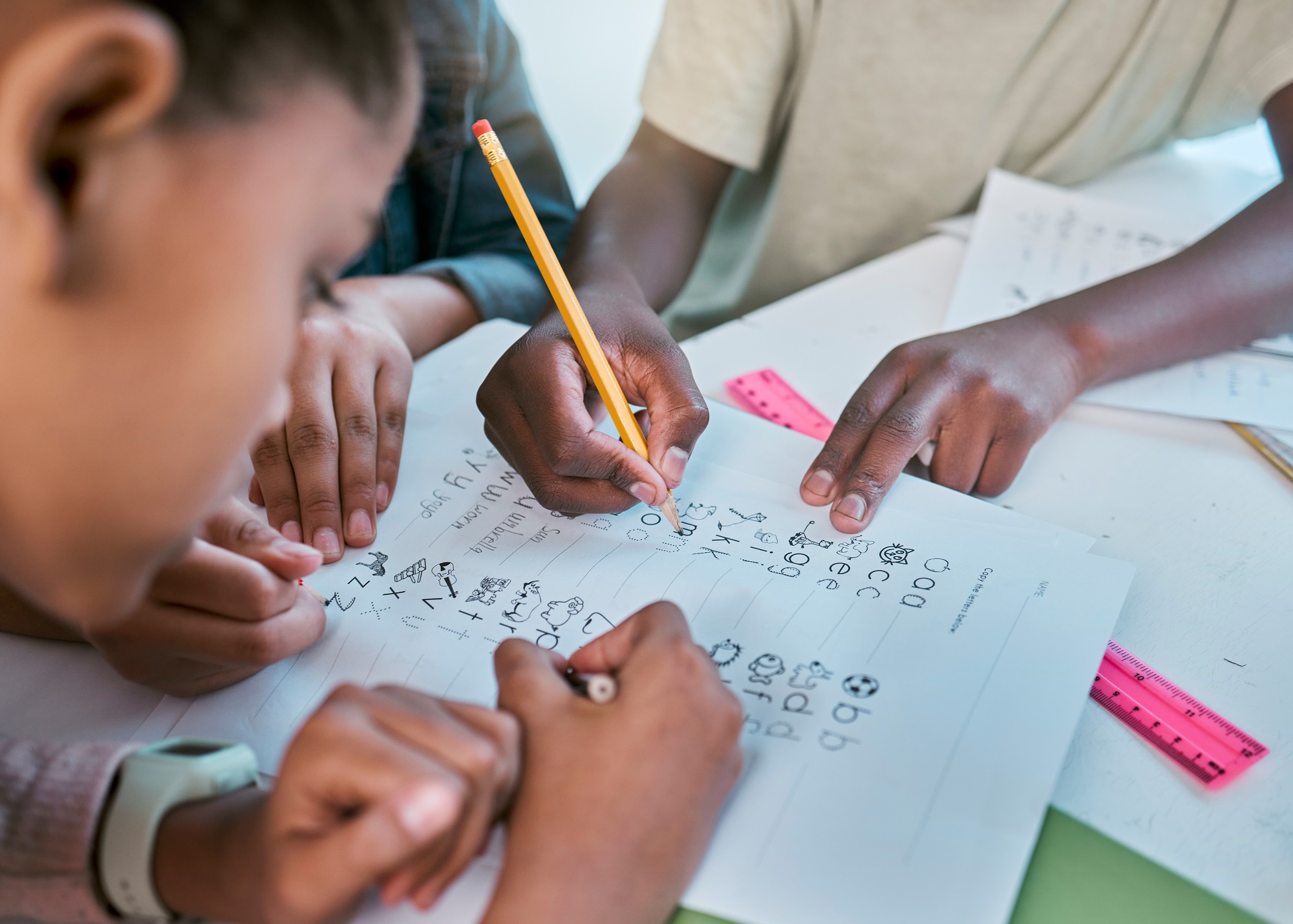
When younger learners work together, a few sayings come to mind: two heads are better than one; many hands make light work; a shared load is a lighter load…but to what extent do these sayings indicate that kids are contributing to and building on each other’s ideas? Does teamwork really create the dream result all the time?
Potentially, yes. Collaborative learning—the process of learning together in the broadest sense, can actively solve problems, provide support, and help develop stronger ideas. In the English language teaching (ELT) classroom, especially with younger learners, group and pair work can unlock even more learning opportunities when combined with intentional support.
One way to understand why this support matters is through the concept of the Zone of Proximal Development (ZPD), introduced by psychologist Lev Vygotsky. The ZPD describes the space between what learners can do independently and what they can achieve with additional guidance. While earlier research emphasized guidance from experts like parents and teachers, more recent studies highlight the value of peer collaboration in extending this learning zone in potentially meaningful ways.
However, it is important to note that these benefits are not always automatically achieved. Without intentional support from teachers, group activities can lead to unequal participation, limited interaction, or off-task behavior. To gain the most out of collaborative activities, it’s essential to find ways to scaffold the experience. In this blog, I share three practical ways to encourage more interactions during collaborative learning.
1. Define Collaboration to Set Clear Expectations
Collaboration means different things to different people. For some learners, it could simply mean sharing reading materials together, but for others, it could mean actively discussing or even taking turns to read or write.
Clarifying expectations will help align what you want learners to do with what they think they’re being asked to do. Outlining roles, behaviors, and shared goals can be beneficial to prevent misunderstandings. One practical way to do this is by creating a visual reference—like a table or list of actions—displayed on the board. Here’s an example of a table showing three common ways learners might collaborate. You could post something like this on your classroom wall, and include images if you have them to help differentiate the types of collaboration:
Three Ways to Work Together
|
Type |
What It Looks Like |
Example of Language or Actions |
|
Turn-taking
|
Take turns to complete a task or share ideas.
|
“My turn, your turn” “Who wants to go next?” |
|
Sharing ideas
|
Listen to each other and respond to build on ideas. |
“I think we could...” “That’s a good idea. Let’s...” “We chose this because...”
|
|
Working together
|
Complete a shared task at the same time, helping each other. |
“Let’s do this part together.” “Can I help...?”
|



As part of learning to work well with others, younger students with an intermediate level of English can also learn and practice important words associated with collaboration in English. Providing definitions or asking students to find the definitions in their preferred language alongside English examples can help support understanding. For example,
|
Vocabulary |
Meaning (in preferred language) |
Example Sentence (in English) |
|
Suggestion |
Offering an idea or plan
|
“I suggest we start with...” |
|
Agreeing |
Saying you think something is right or good. |
“I agree with...” |
|
Disagreeing |
Saying you think something is not right. |
“I disagree...” |
|
Explaining |
Giving reasons or details |
“Let me explain why...”
|
2. Use Structured Tasks With Clear Instructions
Different collaborative activities can create meaningful interactions, helping students engage with both language and peers in purposeful ways. Well-structured tasks provide the support learners need to participate confidently and stay focused. For students who are not yet confident with group or pair work, open-ended activities can be overwhelming—sometimes leading to off-topic discussions, uneven participation, or limited language use.
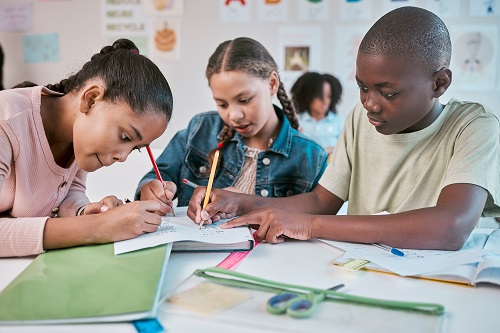 To support all learners, especially those still developing collaborative skills, tasks can be organized into clear stages (pre-, during-, and post-) to reduce cognitive load and provide a sense of direction. When planning these stages, consider when peer interaction will be most effective: Do students need individual thinking time first? Or would they benefit from exploring options collaboratively before responding verbally or in writing?
Here are some ideas on how to implement structured collaboration:
-
- Write the activity stages on the board (before, during, or after) with participatory structures (individual, group, pair, class).
- Establish clear goals at each stage (e.g., "Before we discuss in groups, we are going to plan our own ideas individually first.”)
- Assign time limits for each stage to encourage more on-task interactions.
If you are interested in ideas for balancing peer and individual reading instruction, Valentina and Tan provide strategies for both primary and secondary classrooms in their blog, Small Group, Big Impact: Reading Instruction That Works for MLEs.
3. Enhance Interactions Through Materials
Additional materials can encourage more intentional language-focused discussions among students. Well-chosen materials can help provide clarity and structure, too.
Here are some materials to enhance collaboration at different stages:
|
Support Type |
Materials |
Purpose |
Typical Stage(s) |
|
Language and visual support |
Sentence starters, picture cards, puzzles, storyboards, diagrams, Post-It notes |
Help students express ideas, support vocabulary, and provide key references for discussion
|
Before, During |
|
Task and organizational tools |
Task-checklists, graphic organizers |
Keep groups focused, guide task steps, and record decisions
|
During, Post |
|
Role Guidance |
Role cards (e.g., speaker, recorder, timekeeper) |
Define group responsibilities and encourage more participation
|
Before, During |
If you decide to incorporate technology, you can also consider how students will use their devices. For instance, interactions between two students sharing one device to cocreate a story or create a presentation together will differ from those working simultaneously on separate devices. Similarly, in paper-based activities, whether students share materials or work individually can influence the nature of their collaboration.
All things considered, there are various ways to transform teamwork into dream work by creating supportive spaces. Hopefully, these three ways—setting clear expectations, providing well-structured tasks, and selecting purposeful materials—give you more ideas on how to use new or existing collaborative activities with your younger learners. At the end of the day, the aim is to encourage more meaningful interactions to make collaborative learning more fun and rewarding.
 Happy Teaching and Learning!

About the author
Annita Stell
Annita balances her roles as a writing instructor for younger multilingual learners of English and an academic at the University of Queensland, Brisbane, Australia. As the author of the TESOL No-Prep Activity Cards: Literacy—Small cards, Big impact—she enjoys making learning fun and not a chore through combining creativity, scholarship, and innovation. Her research focuses on the impact of mediation, self-regulation, and collaboration on second language development.