
Sharing Stories and Strengthening Connections in the Primary ELT Classroom
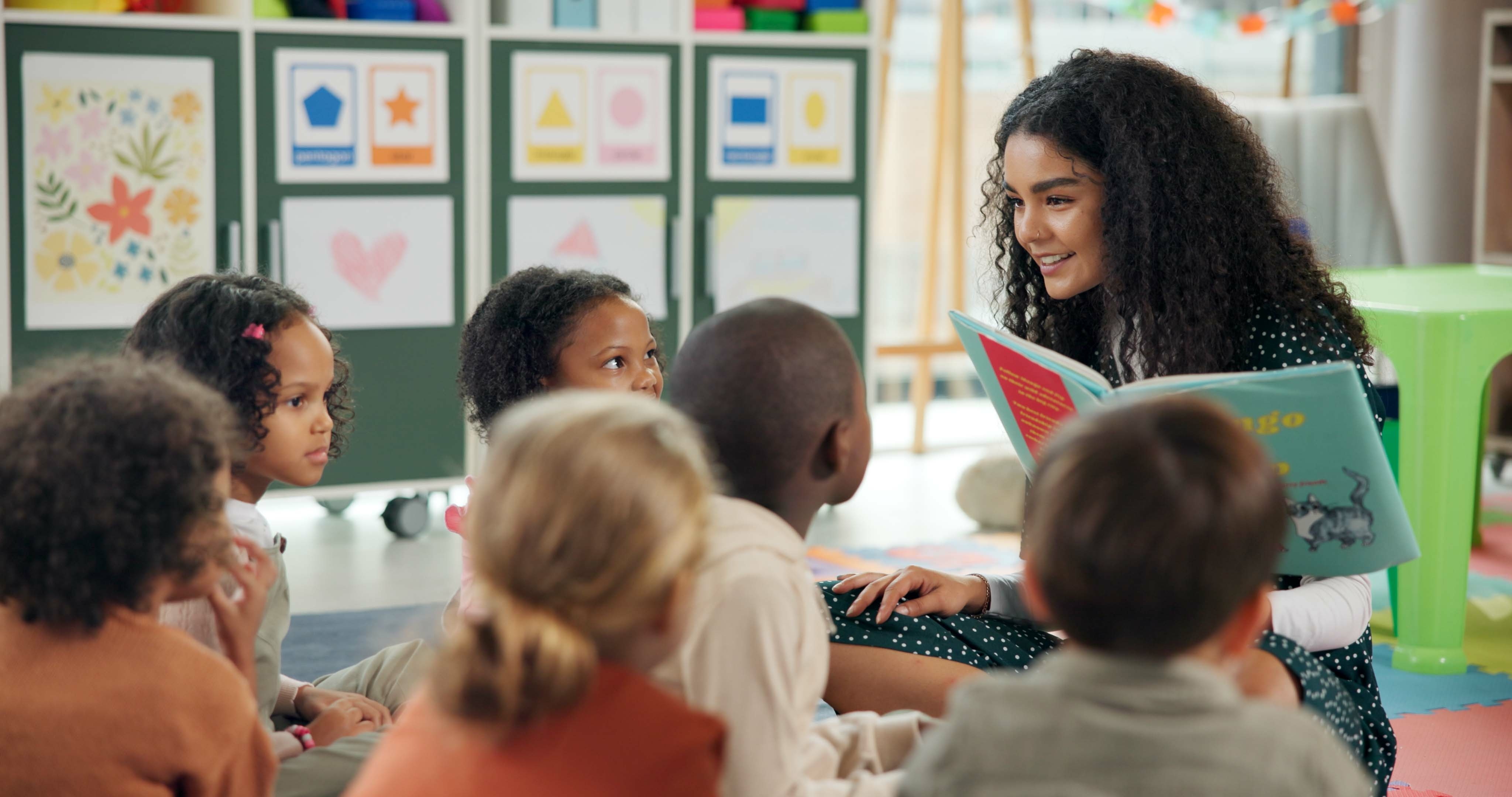
Stories create connections, and connections create engagement.
The Cambridge Dictionary defines a story as “a description, either true or imagined, of a connected series of events.”
A simple definition for something quite powerful.
There is no better way to connect than by sharing stories—whether they are real or imagined, by anyone, at any time. Think of how often stories are shared in your classroom every day—both on-topic and off-topic. Whether it's a student recounting their weekend or asking a classmate about an activity, these small exchanges hold the potential to grow into lively, meaningful conversations in English.
While stories may be shared naturally in the classroom, it’s not always easy for younger learners to begin sharing or extending them, especially when they are still developing their English and communication skills. Some may feel shy, unsure of what to say, or afraid of making mistakes.
So, how can we, as teachers, create supportive opportunities that encourage more storytelling? In this blog, I share two ways to encourage younger learners to engage with stories in the classroom through published content and themselves.
Stories We Read and Watch
Stories from books, videos, or other media give students a shared experience to explore. Published content is often organized in a connected series of events for a wider audience to follow, making it an ideal scaffold for students on how to structure a story with a clear beginning, middle, and end. These texts (or films) can be either traditional or contemporary, and written in or translated to English, which offers a variety for students to engage with and learn from.
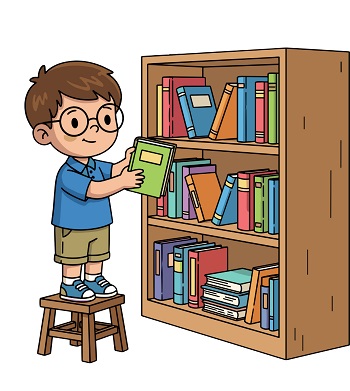 With so much content available, the key is thoughtful organization. Consider how your bookshelves, along with physical and digital folders, align with the language and learning focus. Take a look around your classroom: Does the current layout or format make books and materials easily accessible to students? As classroom priorities shift throughout the year, simple changes, such as rearranging bookshelves or furniture, can open up the space for more conversations about what students have read and watched. There can also be opportunities for students to share their own favorite books or shows with the class for extra options.
Once the materials are reorganized and accessible, it can be easier to incorporate story telling into a range of activities, such as:
-
- Literacy rotations, where students recount a recently completed book or movie as one of the allocated activities. Additional viewing or reading time can be included.
- Show and tell, where students prepare a short summary of a recent book or movie to a partner, group, or whole class. Extra preparation time could be assigned as homework.
- Story mapping, where students create visual representations, such as story maps or comics of key events, independently or in smaller groups.
If students are focusing on the same texts, you might also like to include:
-
- Role-play, where students can act out scenes from a book or movie. This can be with or without costumes and props.
- Story chains, where students take turns adding a sentence or paragraph to the story recount. This could be completed verbally in a circle or written on paper in groups.
As highlighted in Building Better Reading Communities for Younger Learners, open conversations modeled by teachers can spark more interest in lifelong reading habits and help establish a positive tone for a reading community. If we extend this idea, creating a space that showcases stories provides more frequent opportunities for students to share real and imagined stories, which can also help them build their confidence and language skills.
Stories About Ourselves
While published content provides a scaffold for understanding the order of events, personal stories encourage students to see themselves as storytellers.
 What Stories Should They Tell?
Anything, but within reason. Topics can be discussed in advance, much like the authentic materials they might bring to share. Remind students that their stories should be age-appropriate, relatable, enjoyable, and accessible. If you haven’t read it already, this recent blog shares three ways to use authentic materials for speaking practice—each of these options can be great for prompting students to share their own stories.
If students read or watch more content in a different language than English, encourage them to share the story as well. Other students may know the story, and if they don’t, they might be interested in watching or reading it themselves. They should also consider their audience and classroom context. Here are two topic ideas, which could be shared in pairs, groups, or together as a class:
Topic 1: “Hi, my name is...”
As part of getting to know each other, sharing stories behind names can be both fun and meaningful. One way to involve all students is to have them create an acrostic poem or mind map based on their name, using words or phrases that reflect who they are. Colors and drawings can be optional. Once students are finished, teachers and students can invite one another to share a story connected to their name.
Topic 2: “I was as happy as a... when...”
Another way to encourage stories is through prompts. Similes related to emotions can be used as a starting point, prompting students to recall a time when they experienced a particular feeling. You can also write any prompt on the board based on the current learning objectives and/or content.
To build confidence, students might initially be given 15 seconds to respond before answering follow-up questions, such as “What happened?” or “Where were you?” As they become more confident, they can be given more time to share a story and provided with fewer prompts; this will encourage greater independence and elaboration.
When Should Stories Be Shared?
Anytime, but again, within reason. Storytelling can easily shift off track—one story may lead to another, and soon the discussion moves away from the original topic. While this can support fluency and comprehension, it may be less effective during lessons focused on coherence and maintaining a clear line of thought. It is highly recommended to have clear timeframes because, as you know, time may fly extremely fast when you and your students are having fun sharing stories!
At the end of the day, everyone has a story to tell, so why not incorporate more into our classrooms? When students listen, reflect, and share stories from books or from themselves, they build on their ability to use English and strengthen their interactions within the classroom.
This level of engagement can also spark new classroom stories for both teachers and students to share with others, and just like that, the cycle continues: new interactions, new memories, and new language learning opportunities. What could be better than that?.
 Happy Teaching and Learning!

About the author
Annita Stell
Annita balances her roles as a writing instructor for younger multilingual learners of English and an academic at the University of Queensland, Brisbane, Australia. As the author of the TESOL No-Prep Activity Cards: Literacy—Small cards, Big impact—she enjoys making learning fun and not a chore through combining creativity, scholarship, and innovation. Her research focuses on the impact of mediation, self-regulation, and collaboration on second language development.