
How to Make Feedback More Effective for Young L2 Learners

In many primary English language teaching (ELT) classrooms, feedback is often seen as the final product of a learning cycle: Students complete activities, hand in their work, and receive comments, corrections, or marks in return.
This teacher-student feedback cycle is important, but it is only part of the picture. In fact, one of the most valuable skills we can develop in younger learners is the ability to recognize feedback in different forms earlier on in the cycle—whether from teachers, peers, checklists, repeated mistakes, or their own reflection on their performance. In the bigger picture, the goal is to shift our younger learners from language learners to language users.
In saying this, I am not discounting teacher feedback, because there will absolutely be times when learners need suggestions from the teacher, especially when the learning content is challenging. Instead, I would like to highlight the importance of recognizing the benefits of feedback in multiple ways, both inside and outside the classroom, particularly because feedback can be sensitive and may produce either positive or negative results.
So, how can we encourage younger learners to recognize the positive effects of listening to feedback? In this blog post, I explore how feedback can move beyond the traditional teacher-student cycle and become a broader learning process across three stages: before, during, and after activities—effectively shifting feedback toward a more “feedforward” approach.
Early Feedback and Reflection
Feedback does not need to be at the end of any activity, whether new, repeated, or reviewed. A small amount of time can be allocated straight after activities are handed out and instructions are provided to ask reflective questions. These questions could be answered individually, in pairs, in small groups, and/or with the whole class, depending on the class dynamics.
Here are some example questions to share or write on the board:
-
- How would you complete this activity?
- What is the main point?
- What do you need to focus on?
Creating time to think about these questions before starting an activity can encourage students to seek help and gain feedback earlier, rather than waiting until the work is submitted or marked. This early reflection process supports more intentional learning, as students are encouraged to notice and respond to feedback as they work. For a bit of extra fun, thinking music or brainstorming notes could be incorporated.
 Feedback in Progress
There are also many opportunities for feedback while an activity is in progress. However, a balance is required because too much can overwhelm students and affect their confidence, and too little can have no benefit.
The following table provides a summary of feedback types to consider when thinking about how to implement more beneficial feedback in the classroom. The goal is to provide enough guidance to support progress and make language learning enjoyable.
|
Type of Feedback |
Ways to Implement |
How It Supports Feedback |
|
Support network
|
Design pair work, group activities, or structured talk routines.
|
Feedback emerges through peer discussion and shared problem solving.
|
|
Scheduled check points
|
Build pauses into activities for quick review, reflection, or discussions.
|
Feedback emerges through opportunities to review progress before continuing.
|
|
Teacher monitoring
|
Monitor during activities, listen in on conversations, and ask targeted questions.
|
Feedback is targeted based on observations and student talk.
|
|
Ongoing self-monitoring
|
Use checklists, criteria, and/or questions. |
Feedback is supported through self-monitoring to notice progress, identify issues, and make changes.
|
Balance is also important in terms of how feedback is provided and why. For instance, if the focus is on developing learner autonomy, students should be made aware of the different sources available to them, including peers, checklists, and self-monitoring tools, such as time checks and self-reflection questions. In some cases, teachers may also reduce direct monitoring or support during activities to encourage learners to rely more on their own self-monitoring. This shift helps students become more independent in recognizing and acting on feedback as they learn.
After Activities Are Complete
Once activities are completed, handed in to teachers, and then marked and handed back to students, the question remains: How do we get students to notice the feedback we give to them in a positive way?
Here are a few examples of how we could help students engage with the feedback more effectively through extra short 10–15-minute activities:
Stickers and Stamps
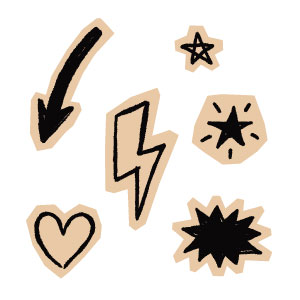 Provide visual signals to help highlight specific strengths or areas for attention. A key could be provided on a slide deck for the whole class or a handout in smaller groups to get students to identify the changes they need to make. There could be stickers for different language-related or content-related issues. For example, a star sticker could indicate good use of describing words, while a question mark could mean more information needed.
Highlight and Sort
Give students their marked work and ask them to highlight or circle one strength, one area of improvement, and/or types of feedback on the page. This encourages active reading and also provides teachers with insight into students’ understanding of the comments.
Feedforward Reflection
Have students select two or three points they would like to improve in their next activity, and write how they would do this, either in sentences or paragraphs depending on their level. Sentence starters such as, “Next time I will...” or “To improve this, I will...” can be displayed on the board to support their verbal or written responses.
Ask Questions for Support
Ask students to write questions based on their feedback to support understanding and improvement. These questions can first be discussed with peers before clarifying with the teacher. For example, “What does this comment (or word) mean?” or “How can I improve this part?” This supports students in processing feedback actively.
Ultimately, effective feedback in an ELT classroom is not about how much is given, but how well it helps students become more aware and more independent in their language journey. I hope the different examples of feedback before, during, and after activities give you more ideas for your own classroom.
The aim is to find balance in when and how feedback (or feedforward) is used so that students can notice, apply, and move forward. Over time, these changes are what helps build good beneficial feedback routines.
 Happy Teaching and Learning!

About the author
Annita Stell
Annita balances her roles as a writing instructor for younger multilingual learners of English and an academic at the University of Queensland, Brisbane, Australia. As the author of the TESOL No-Prep Activity Cards: Literacy—Small cards, Big impact—she enjoys making learning fun and not a chore through combining creativity, scholarship, and innovation. Her research focuses on the impact of mediation, self-regulation, and collaboration on second language development.